


Research
Microbial sulfur metabolism
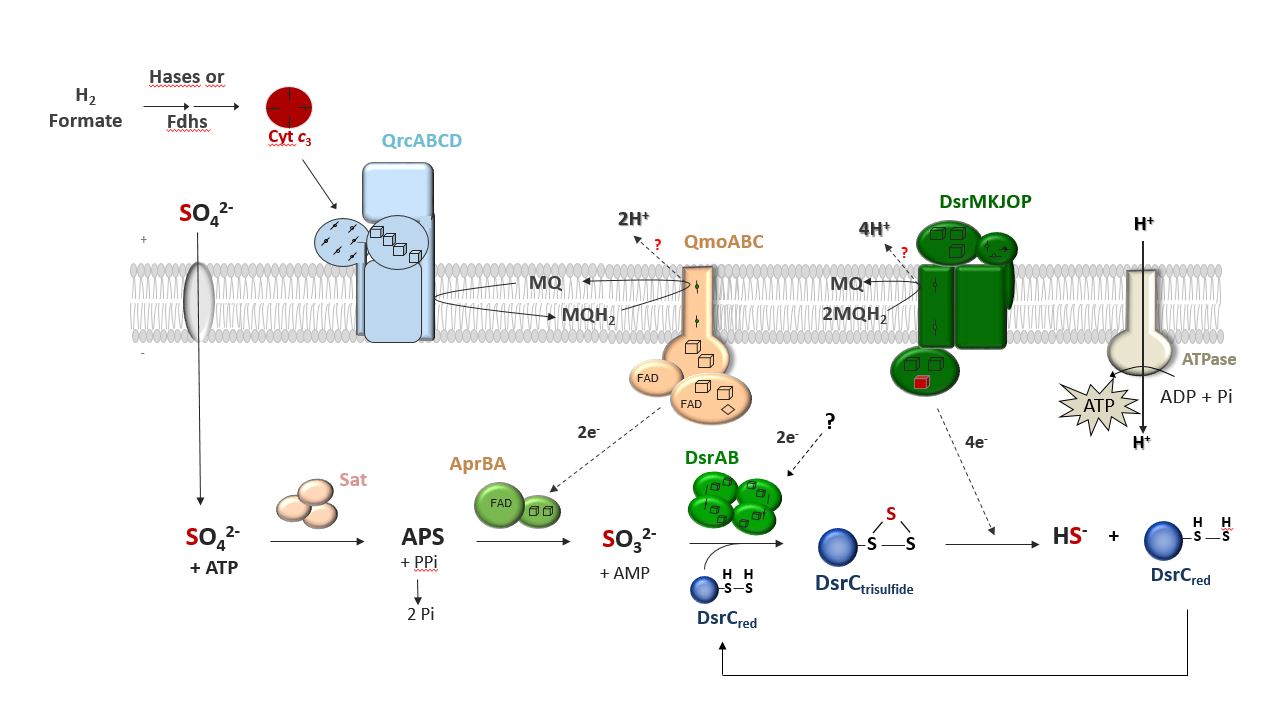
Sulfate respiration is one of the major modes of anaerobic respiration in anoxic environments. This ancient microbial metabolism plays a critical role in the biogeochemical sulfur cycle, and is also important in the gut. Sulfate respiration displays some unique metabolic features, and how microorganisms obtain energy from this process has not been fully established. We investigate the respiratory metabolism of sulfate reducers, which will give us important clues into the evolution of Life on the early earth, and is crucial for exploiting these organisms in biotech applications or for controlling the damaging side-effects of their activity (for example in biocorrosion or in microbiota-associated diseases like colorectal cancer and inflammatory bowel diseases). We focus on the metabolic pathways involved in sulfate/sulfite respiration, and have characterized several essential membrane complexes for the first time, which was an important breakthrough into understanding the mechanism of this process. We also discovered the presence of an additional step in dissimilatory sulfate reduction, involving a protein trisulfide as the product of sulfite reduction. Ongoing studies focus on how the membrane complexes interact with other proteins in metabolic pathways to achieve energy conservation.
Selected publications:
Barbosa ACC, Venceslau SS, Pereira IAC (2024) DsrMKJOP is the terminal reductase complex in anaerobic sulfate respiration. Proc. Nat. Acad. Sci., 121 (6) e2313650121. DOI: 10.1073/pnas.2313650121
Santos A¥, Venceslau SS¥, Grein F, Leavitt WD, Dahl C, Johnston DT and Pereira IAC* (2015) A protein trisulfide couples dissimilatory sulfate reduction to energy conservation. Science 350, 1541
Duarte AG, Catarino T, White GF, Lousa L, Neukirchen S, Soares CM, Sousa FL, Clarke TA & Pereira IAC* (2018) An electrogenic redox loop in sulfate reduction reveals a likely widespread mechanism of energy conservation. Nature Comm., 9, 5448
Nikolay A. Chernyh*, Sinje Neukirchen, Evgenii N. Frolov, Filipa L. Sousa*, Margarita L. Miroshnichenko, Alexander Y. Merkel, Nikolay V. Pimenov, Dimitry Y. Sorokin, Sergio Ciordia, María Carmen Mena, Manuel Ferrer, Peter N. Golyshin, Alexander V. Lebedinsky, Inês A. Cardoso Pereira* & Elizaveta A. Bonch-Osmolovskaya (2020) Dissimilatory sulfate reduction in the archaeon ‘Candidatus Vulcanisaeta moutnovskia’ sheds light on the evolution of sulfur metabolism. Nature Microbiology, 5, 1428–1438 | https://doi.org/10.1038/s41564-020-0776-z
Ferreira D, Barbosa ACC, Oliveira GP, Catarino T, Venceslau SS, Pereira IAC (2022). The DsrD functional marker protein is an allosteric activator of the DsrAB dissimilatory sulfite reductase. Proc. Nat. Acad. Sci., 119 (4) e2118880119; DOI: 10.1073/pnas.2118880119
Neukirchen S, Pereira IAC, Sousa FL (2023) Stepwise pathway for early evolutionary assembly of dissimilatory sulfite and sulfate reduction. ISME J., 17, 1680–1692
DOI: 10.1038/s41396-023-01477-y
Redox enzymes for sustainable catalysis
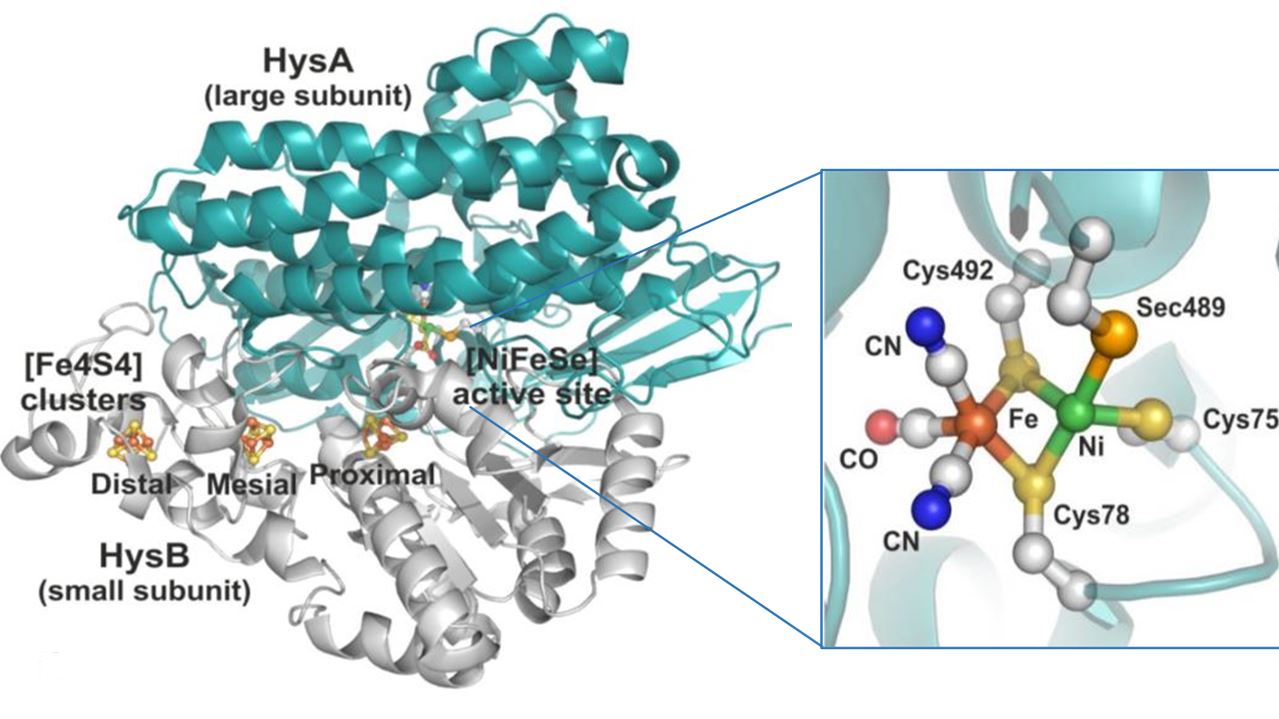
We study important redox enzymes for the synthesis of biofuels, including a [NiFeSe] hydrogenase for H2 production and oxidation, and a W/Sec-formate dehydrogenase for CO2 reduction. We use a rational approach to engineer these enzymes with the aim to investigate their mechanism and the molecular basis for their high activity and stability. Together with collaborators we also investigate their use for development of novel biohybrid systems for electro or photocatalysis for H2 production and CO2 reduction.
Selected publications:
W/Sec Formate dehydrogenaseOliveira AR, Mota C, Vilela-Alves G, Manuel RR, Pedrosa N, Fourmond V, Klymanska K, Léger C, Guigliarelli B, Romão MJ, Pereira IAC (2023) An allosteric redox switch involved in oxygen protection in a CO2 reductase. Nature Chem. Biol. 2024 20(1):111-119.
doi: 10.1038/s41589-023-01484-2.
Oliveira AR, Mota C, Mourato C, Domingos RM, Santos MFA, Gesto D, Guigliarelli B, Santos-Silva T, Romão MJ*, Pereira IAC* (2020) Toward the mechanistic understanding of enzymatic CO2 reduction. ACS Catalysis, DOI: 10.1021/acscatal.0c00086
Badiani, V.M., Casadevall, C., Miller, M., Cobb S.J., Manuel R.R., Pereira, I.A.C., Reisner, E. (2022) Engineering Electro- and Photocatalytic Carbon Materials for CO2 Reduction by Formate Dehydrogenase. JACS, 144, 14207–14216. DOI: 10.1021/jacs.2c04529
Cobb, S.J., Badiani, V.M., Dharani, A.M., Wagner A., Zacarias S., Oliveira A:R., Pereira, I.A.C., Reisner, E (2022) Fast CO2 hydration kinetics impair heterogeneous but improve enzymatic CO2 reduction catalysis. Nature Chem., 14(4), pp. 417–424. DOI: 10.1038/s41557-021-00880-2
Edwardes Moore, E., Andrei, V., Oliveira, A.R., Coito A.M., Pereira, I.A.C., Reisner, E. (2021) A Semi-artificial Photoelectrochemical Tandem Leaf with a CO2-to-Formate Efficiency Approaching 1 %. Angewandte Chemie Int. Ed., 60, 26303–26307. DOI: 10.1002/anie.202110867
Miller, M., Robinson, W.E., Oliveira, A.R., Heidary, N., Kornienko, N., Warnan, J., Pereira, I.A.C., Reisner, E. (2019) Interfacing Formate Dehydrogenase with Metal Oxides for the Reversible Electrocatalysis and Solar-Driven Reduction of Carbon Dioxide. Angew. Chemie 131, 4649, DOI: 10.1002/ange.201814419
Marques MC, Tapia C, Gutiérrez-Sanz O, Ramos AR, Keller KL, Wall JD, De Lacey AL, Matias PM*, Pereira IAC* (2017) The direct role of selenocysteine in [NiFeSe] hydrogenase maturation and catalysis. Nature Chem. Biol., 13, 544-550. DOI: 10.1038/nchembio.2335
Zacarias S; Temporão A; del Barrio M; Fourmond V; Leger C; Matias P*; Pereira IAC* (2019) A hydrophilic channel is involved in oxidative inactivation of a [NiFeSe] hydrogenase. ACS Catalysis. DOI: 10.1021/acscatal.9b02347
Moore EE, Virgil A, Zacarias S, Pereira IAC, Reisner E (2020) Integration of a Hydrogenase in a Lead Halide Perovskite Photoelectrode for Tandem Solar Water Splitting. ACS Energy Lett., 5, 232-237. DOI: 10.1021/acsenergylett.9b02437
Ruff A, Szczesny J, Markovi N, Conzuelo F, Zacarias S, Pereira IAC, Lubitz W & Schuhmann W (2018) A fully protected hydrogenase/polymer-based bioanode for high-performance hydrogen/glucose biofuel cells. Nature Comm. 9, 3675. DOI: 10.1038/s41467-018-06106-3
Others
Cimmino L, Duarte AG, Ni D, Ekundayo BE, Pereira IAC, Stahlberg H, Holliger C, Maillard J (2023) Structure of a membrane-bound menaquinol:organohalide oxidoreductase. Nature Comm., 14, 7038. DOI: 10.1038/s41467-023-42927-7
Pimenta AI, Paquete CM, Morgado L, Edwards MJ, Clarke TA, Salgueiro CA, Pereira IAC, Duarte AG (2023) Characterization of the inner membrane cytochrome ImcH from Geobacter reveals its importance for extracellular electron transfer and energy conservation. Protein Sci. DOI: 10.1002/pro.4796
Whole cell catalysis
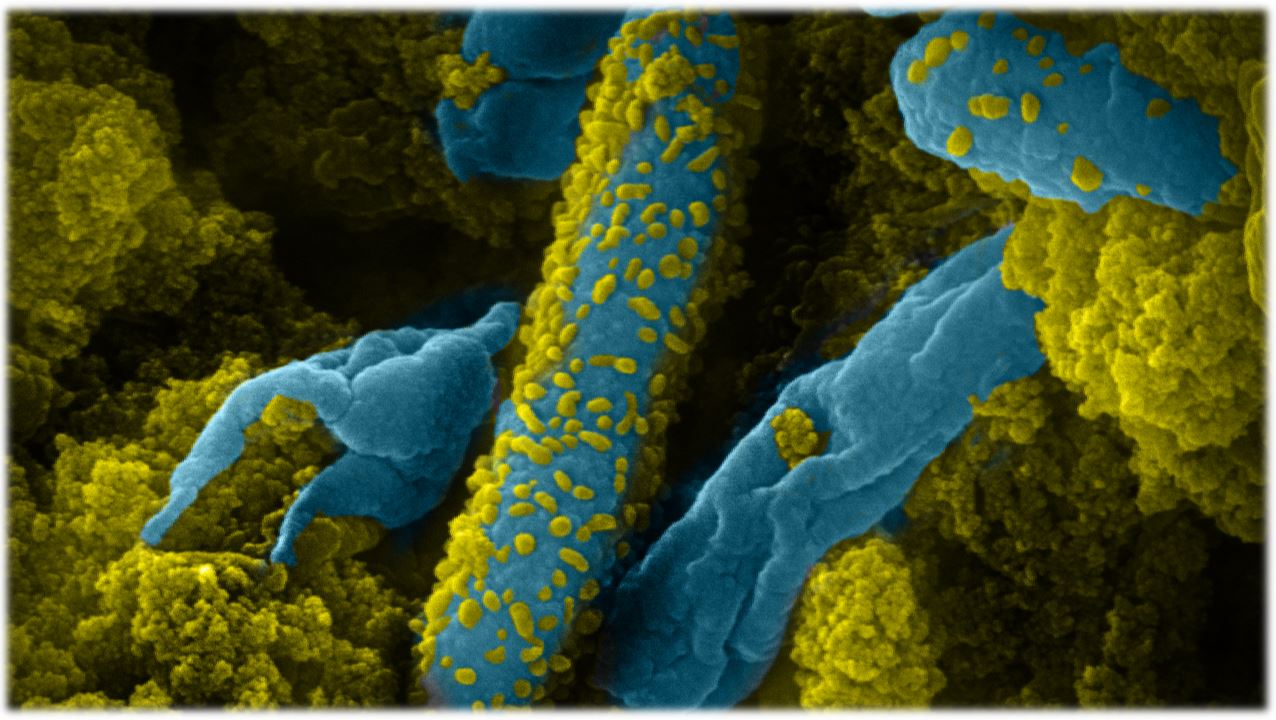
We also investigate the use of anaerobic bacteria for whole cell biocatalysis of H2 production, CO2 reduction or bioremediation of environmental pollutants, using simple cells or coupled with synthetic materials.
Selected publications:
Martins M, Toste C, Pereira IAC (2021) Enhanced Light‐Driven Hydrogen Production by Self‐Photosensitized Biohybrid Systems. Angew. Chemie, 60, DOI: 10.1002/anie.202016960
Martins M*, Mourato C, Sanches S, Noronha JP, Barreto Crespo MT, Pereira IAC * (2017) Biogenic platinum and palladium nanoparticles as new catalysts for the removal of pharmaceutical compounds. Water Res., 108, 160-168
Mourato C, Martins M, da Silva SM, Pereira IAC* (2017) A continuous system for biocatalytic hydrogenation of CO2 to formate. Bioresource Technol., 235, 149-156 DOI 10.1016/j.biortech.2017.03.091
Martins M & Pereira IAC* (2013) Sulfate-reducing bacteria as new microorganisms for biological hydrogen production. Int. J. Hydr. Energ, 38, 12294-12301
Role of sulfidogenic bacteria in human disease
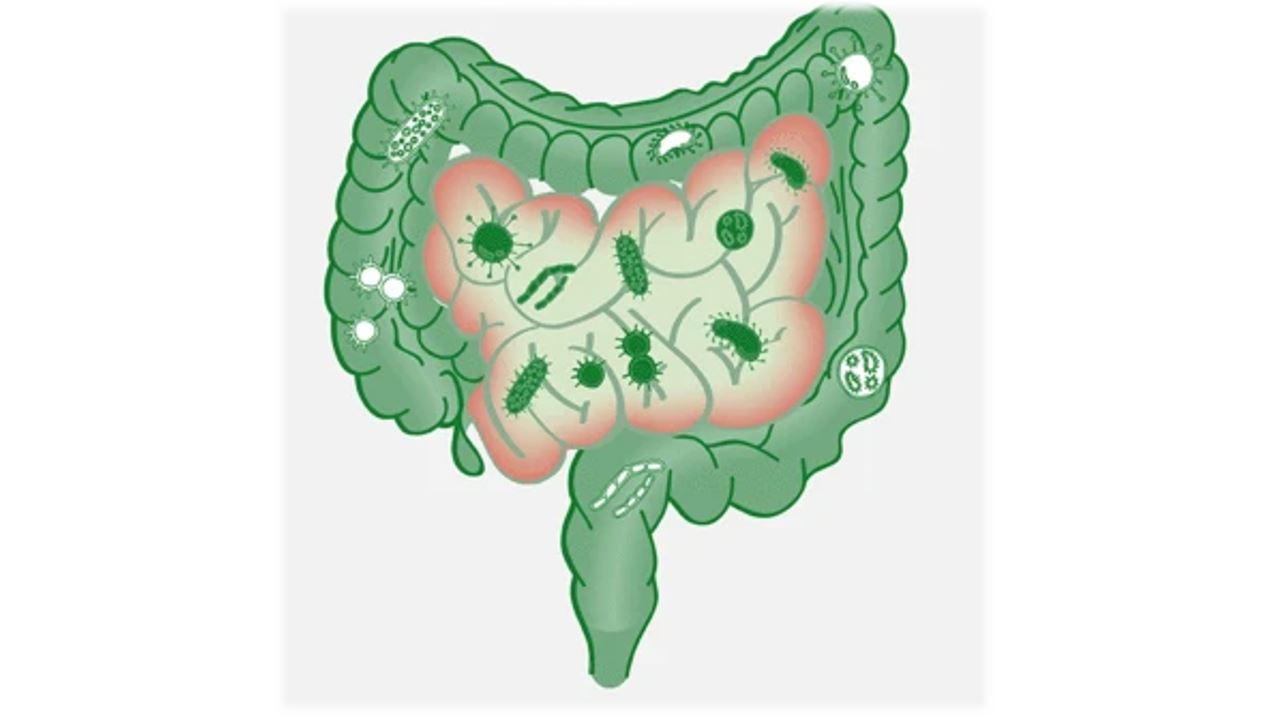
Sulfide producing bacteria in the gut have been associated with colorectal cancer and inflammatory bowel diseases. We study the main gut sulfidogenic bacteria associated with these conditions, namely the taurine-utilizing Bilophila wadsworthia and Desulfovibrio spp.
Selected publications:
Pimenta AI, Bernardino RM, Pereira IAC (2024) Role of sulfidogenic members of the gut microbiota in human disease. Adv. Microbio. Physiol. DOI: 10.1016/bs.ampbs.2024.04.003
Loubinoux J, Bronowicki JP, Pereira IAC, Mougenel JL, and Le Faou AE (2002) Sulfate-Reducing Bacteria in Human Feces and their Association with Inflammatory Bowel Diseases. FEMS Microbiol. Ecol. 1341, 1-6
da Silva SM, Venceslau SS, Fernandes CLV Valente FMA and Pereira IAC (2008) Hydrogen as an energy source for the human pathogen Bilophila wadsworthia. Antonie van Leeuwenhoek, 93 (4), 381-390
Loubinoux J, Valente FMA, Pereira IAC, Costa A, Grimont PAD, and Le Faou AE (2002) Reclassification of the only species of the genus Desulfomonas, Desulfomonas pigra, as Desulfovibrio piger comb. nov. Int. J. Syst. Evol. Microbiol., 52 (4), 1305-1308
Loubinoux J, Mory F, Pereira IAC and Le Faou A (2000) Bacteremia Caused by a strain of Desulfovibrio Related to the Provisionally named Desulfovibrio fairfieldensis. J. Clin. Microbiol. 38 (2), 931-934


