







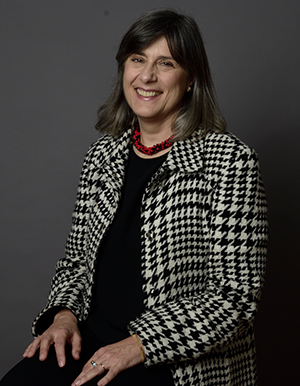
Teresa Crespo Lab
 |
Our laboratory is dedicated to advancing microbiological solutions that address critical aspects of food safety and quality, as well as the development of therapeutic solutions and strategies to tackle environmental challenges. Our interdisciplinary group leverages a diverse range of techniques, including conventional microbiology, molecular biology, novel omics approaches, and genetic engineering. These tools enable us to effectively address multifaceted issues. Our primary area of expertise lies in the study of microorganisms, encompassing bacteria, fungi, and microalgae. We explore their presence across various matrices, evaluating not only their pathogenic potential but also their biotechnological capabilities. Furthermore, we assess their impact on both the environment and human health. We characterize biological compounds and extracts envisaging different applications like their use as antimicrobials, as phytoprotective/phytostimulant formulations or as nutraceuticals. |
|
Teresa Crespo Phone (+351) 214469551 | Extension 69551 |
|
  |
Research Interests
Our laboratory is dedicated to advancing microbiological solutions that address critical aspects not only of food safety and quality, but also to uncover the possibilities presented by microorganisms, unlocking their potential for practical applications across various domains.
Unravelling bacterial virulence factors and antibiotic resistance genes. Starting with the long track record of studying the genus Enterococcus, we delve into the world of bacterial virulence factors. Our research extends beyond individual bacteria as we are interested in the spread of these factors (genes) within microbial communities, understanding how they influence health and disease dynamics. Additionally, we pretend to develop predictive tools to help anticipate the emergence of antibiotic resistance in nosocomial bacteria, foodborne pathogens, and those lurking in different environments.
Using a multidisciplinary approach, we dissect and characterize microbial populations. Our toolkit includes conventional microbiological/biochemical methods, molecular biology, cutting-edge technologies like OMICs, and everything in between. We aim to be at the forefront of microbial census-taking, identifying species, assessing diversity, and deciphering their functional roles.
Our mission involves developing and implementing molecular techniques for different applications. One is the production of mutants that can exhibit unique genetic alterations, making them valuable tools for scientific exploration. By manipulating their genetic makeup, we gain insights into physiological processes that govern their behaviour. These insights pave the way for innovative applications, including the use of bacteria and microalgae as factories for producing pharmaceuticals and therapeutic products. We are especially interested in microorganisms that are inherently resistant to gene deletions or additions. Another area is the identification and characterization of plastomes (i.e. chloroplasts for plants) and the study of whole genomes from bacteria, from different matrixes, with implications in food safety, health, and biotechnological medical applications. In that domain and relying on the use of next-generation sequencing, several chloroplast genomes of medicinal, aromatic, and condimental plants have, for the first time, been described and made publicly available, an area that is critical for plant diversity studies, conservation efforts, and DNA barcoding applications, which are crucial in terms of food safety evaluation and identification and use of medicinal plants.
Bacteria/host interactions and microalgae/bacteria interactions are another area of interest, as these microscopic partners engage in complex interactions that impact ecosystems, human health, and industry. In some cases, by their interactions and production of secondary metabolites, we aim to unlock their potential for high-value bioactive products production. These compounds can find applications in food, pharmaceuticals, and cosmetics.
The study of probiotics for immune modulation is a potential target of the group. This dynamic duo can modulate specific therapeutic responses, potentially revolutionizing healthcare. Probiotics tailored to enhance immune function, promote gut health, and contribute to overall well-being can open the way for preventive medicine.
In summary, our group’s dedication to microbiological research transcends the lab walls. By emphasizing diverse methodologies, we pretend to contribute to a safer, healthier and more sustainable society.
Group Members
PhD Holders
- Frédéric Bustos Gaspar, PhD
- Francisco Nascimento, PhD
- Ana Quendera, PhD
- Sara Tedesco, PhD
PhD students
- Inês Leonardo
- Pedro Brandão
- Francisco Nunes
- Rodrigo Martins
- Maria Constança Bertrand
MSc holders
- Margarida Pimenta
- Filipa Silva
MSc students
- Helena Ferreira
Selected Publications
-
Brandão, P.R., M.T. Barreto Crespo; Francisco X Nascimento. 2022. Phylogenomic and comparative analyses support the reclassification of several Komagataeibacter species as novel members of the Novacetimonas gen. nov. and bring new insights into the evolution of cellulose synthase genes. Int J Syst Evol Microbiol 72: 005252.
-
Oliveira, M., I.C. Leonardo, A.F. Silva, J. Goulão Crespo, M. Nunes M.T. Barreto Crespo. 2022. Nanofiltration as an Efficient Tertiary Wastewater Treatment: Elimination of Total Bacteria and Antibiotic Resistance Genes from the Discharged Effluent of a Full-Scale Wastewater Treatment Plant. Antibiotics,11(5), 630.
-
Leonardo, I.C., M.T. Barreto Crespo, F.B. Gaspar. 2022. Unveiling the complete genome sequence of Alicyclobacillus acidoterrestris DSM 3922T, a taint-producing strain. Genes|Genomes|Genetics (G3, Bethesda), 12, 12.
-
Leonardo, I.C., A. Alberti, F. Denoeud, M.T. Barreto Crespo, J. Capelo, F.B. Gaspar. 2023. The complete plastome of Centaurium erythraea subsp. majus (Hoffmanns. & Link) M.Laínz (Gentianaceae), the first chloroplast genome belonging to the Centaurium genus. Mitochondrial DNA Part B, 8 (1): 86–90.
-
Bertrand, C.D.F, R. Martins, F. Quintas-Nunes, P. Reynolds-Brandão, M.T. Barreto Crespo, Francisco X Nascimento. 2023. Saccharopolyspora sp. NFXS83 in marine biotechnological applications: from microalgae growth promotion to the production of secondary metabolites. Microorganisms, 11, 902.
-
S. Mondal, U.T. Syed, E. Pinto, I.C. Leonardo, P. Romero, F.B. Gaspar, M.T. Barreto Crespo, V. Sebastian, J.G. Crespo and C. Brazinha. 2024. Sustainable production of nanoemulsions by membrane-assisted nanoemulsification using novel aroma-based hydrophobic deep eutectic solvents for enhanced antifungal activities. Journal of Cleaner Production, 141167. https://doi.org/10.1016/j.jclepro.2024.141167.
Laboratory's Website
For further information please visit the laboratory's website
Microbiologia (PT)
Microbiology of Man Made Environments
O laboratório dedica-se a promover soluções microbiológicas que abordem aspetos críticos de qualidade e segurança alimentar, bem como o desenvolvimento de soluções terapêuticas e estratégias para enfrentar desafios ambientais. O nosso grupo interdisciplinar utiliza técnicas diversificadas, incluindo microbiologia convencional, biologia molecular, abordagens ómicas inovadoras e engenharia genética. Estas ferramentas permitem-nos abordar eficazmente questões multifacetadas. A nossa principal área de especialização é o estudo de microrganismos, incluindo bactérias, fungos e microalgas. Investigamos a sua presença em várias matrizes, avaliando não só o seu potencial patogénico, mas também as suas capacidades biotecnológicas. Além disso, avaliamos o seu impacto tanto no ambiente como na saúde humana. Caracterizamos compostos biológicos e extratos, com vista a aplicações diferentes, como atividade antimicrobiana, fitoprotector/ fitoestimulador e funções ou usos nutracêuticos.
Short CV
Teresa Crespo is Senior Scientist at iBET, is Head of the Food Safety & Microbiology Laboratory and Quality Assurance Senior Advisor of iBET. Is graduated in Biology at Faculty de Ciências of Universidade de Lisboa and holds a PhD in Biological Engineering from Faculdade de Ciências e Tecnologia of Universidade NOVA de Lisboa.
The area of expertise in the last 30 year has been microbiology, in particular microbial characterization and ecology of microbial populations and on antibiotic resistance and pathogenicity/virulence mechanisms of bacteria. The areas of research have been food and water quality and safety, food authenticity and, more recently, in bioremediation processes and water treatments and biotechnology. The laboratory team has participated in the design of state-of-the-art conventional microbiology and molecular biology methodologies, phenotypic characterization, qPCR, dPCR, cloning, flow cytometry, fluorescence in situ hybridization (FISH) and NGS (next generation sequencing). Although more dedicated to bacteria, the team has worked with fungi and more recently with viruses and microalgae.
CV Highlights: CV Highlights: (i) more than 95 published papers; (ii) author of 8 book chapters; (iii) editor of 1 book; (iv) supervised (co-supervised) 12 PhD students (thesis defended) and 3 PhD students (ongoing); (v) hosted 9 post-docs; (vi) participated and/or been principal investigator of national and international projects in more than 50 projects*; (vii) gave more than 30 conferences oral; (viii) participated in 4 TV programs on science; (ix) contributed as referee for several scientific publications; (x) participated in preparation of Guides for Microbiological Laboratories and (xi) is auditor for accredited food microbiological laboratories and GLP laboratories.
*Has participated and been responsible for national projects from Junta Nacional de Investigação Científica e Tecnológica (JNICT), Fundação para a Ciência e Tecnologia (FCT) and Agência de Inovação (ANI), PRR (IPAME). Has participated and been responsible for iBET participation in projects from FP6 (EU), FP7 (EU), Horizon 2020 (EU).


