
Postdocs are a vital part of ITQB NOVA’s research community, with over 100 currently working at the institute. This stage plays a key role in career development, allowing researchers to strengthen skills from their PhD and acquire new ones useful for both research and non-research careers. For those pursuing a research path, the postdoc period fosters independence, preparing scientists to eventually lead their own research groups.
At ITQB NOVA, postdocs work under the guidance of experienced researchers (typically PIs) while taking on key responsibilities, such as supervising students, writing papers and grants, and participating in scientific events. They may also contribute to teaching at the Master’s and Doctoral levels and serve as jurors in Master’s thesis discussions.
Postdocs are actively involved in the institute’s community. Each Research Division has postdoc representatives who facilitate communication with ITQB NOVA’s management. Postdocs also organize initiatives like summer schools and retreats.
Funding for postdocs comes from competitive fellowships or through research project funding. PhDs interested in a postdoc position at ITQB NOVA can contact lab coordinators directly or explore current fellowship opportunities within ongoing projects.
ITQB NOVA Postdoctoral Association (PDA)
The PDA was established to foster a sense of community among early career researchers at ITQB NOVA and iBET. Its mission is to support postdoc interests by organizing activities that promote professional and personal development, as well as networking and career growth opportunities.
The PDA connects the postdoctoral community with ITQB NOVA and iBET’s Board of Directors, and to NOVA’s Rectory.
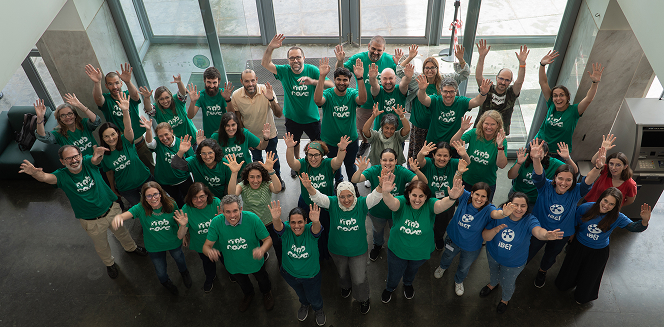


Patrícia Borges – Biological Chemistry
Mario Del Rosario – Biology
Ophélie Remy Enckels – Biology
2023/2024
Elin Moe – Biological Chemistry Division
Rute Matos – Biology Division
María Flores-Tornero – Plant Division
Dragana Barros – Technology Division
2022/2021
José Artur Brito – Biological Chemistry Division
Vânia Pobre – Biology Division
Pedro Barros – Plant Division
Henrique Almeida – Technology Division
2020/2021
Sara Realista – Chemistry Division
Sara Silva – Biological Chemistry Division
Pedro Pereira – Biology Division
André Cordeiro – Plant Division
Dragana Barros – Technology Division
2019/2020
Américo José Gonzalez Duarte – Biological Chemistry Division (co-chair)
Mónica Susana Claudino Nunes – Technology Division (co-chair)
Inês Maria S. Chaves – Plant Division (vice-chair)
James Yates – Chemistry Division (treasurer)
Patricia Reed – Biology Division (secretary)
2018/2019
Ana Filipa Rodrigues, Ana Sofia Coroadinha Lab (co-chair)
Bruno Alexandre, Isabel Abreu Lab (co-chair)
Filipe Folgosa, Miguel Teixeira Lab (vice-chair)
James Yates, Single Molecule Processes (treasurer)
Patricia Reed, Mariana Pinho Lab (secretary)
2017
Dušica Radoš, Helena Santos Lab (co-Chair)
Luis Gonçalves, Helena Santos Lab (co-Chair)
Naiara Fernandez, Beatriz Royo Lab (vice-Chair)
Pedro Barros, Margarida Oliveira Lab (secretary)
Diana Lousa, Cláudio M. Soares Lab (treasurer)
2016
José Artur Brito, Margarida Archer Lab (co-chair)
Rute Matos, Cecília Arraiano Lab (co-chair)
Pedro Barros, Margarida Oliveira Lab (vice-chair)
Hélder Vila Real, Ana Luísa Simplício Lab (tresurer)
Liliana Tomé, Isabel Marrucho Lab (secretary)
Early Career Researcher Award (ECRA)

ECRA is an annual research award launched and managed by ITQB NOVA and IBET’s Postdoctoral Association (PDA).
It aims to distinguish and finance innovative and highly collaborative R&D proposals featuring frontier research between two distinct but complementary research areas. ECRA fosters disruptive innovation and nurtures early career researchers’ creativity by promoting and financing productive scientific collaboration and active engagement of early career researchers.
Supported by: 

Applications to the 7th edition are open from 10th February to 31st March 2026.
Prize: 12000€ and a Bonus Prize
Download the template here and send it to ecra.prize@itqb.unl.pt.
Further information in “Rules and Guidelines”
ECRA will be given to the best R&D project proposal featuring Frontier Research between two Early Career Researchers from different ITQB NOVA or iBET laboratories (here referred to as PI1 and PI2).
Post-award guidelines
Upon being awarded the ECRA, PI1 and PI2 should acknowledge ECRA in any communication where the results funded by the award are used. These include any result communication (manuscript, poster, presentation) or activity (outreach, promotion, website) that is related with the work funded by ECRA. For this purpose please add the following sentence: “This work was funded by the Early Career Researcher Award (ECRA) at ITQB NOVA” or add the ECRA logos.
Pre-award guidelines
Eligibility
PI1 and PI2 must be early career researchers (people who have a PhD degree but are not Principal Investigators/Lab heads of an established laboratory) at ITQB NOVA or iBET .
PI1 and PI2 must belong to ITQB NOVA/iBET established laboratories.
PI1 and PI2 cannot belong to the same ITQB NOVA /iBET established laboratory.
PI1 and PI2 cannot participate in more than one application.
PI1 and PI2 must present a document where the PI of the host laboratory states that the researcher is aware of the application submission and approves the future execution of the project in the laboratory.
PI1 and PI2 must present a novel idea that has not been funded by any funding agency or other funding source.
Proposals that do not comply with the proposal format guidelines (see below) or do not respect the eligibility criteria will be excluded with no possibility for resubmission.
Download evaluation guidelines here.
Budget justification
The ECRA budget can be used to fund expenses relevant for the research project as long as these are critical for its success, therefore all expenses require a justification. Regarding the nature of the expense, any expense ITQB NOVA guidelines allows to be associated with a research project is eligible for the ECRA budget (e.g. human resources, equipment, reagents, conferences, etc).
Proposal template here.
ECRA 2019/2020 (2nd edition): “LentiSloop: Synthetic 5’UTR mRNA-stabilizing-elements to optimize lentiviral vector production for human gene therapy“ – Ana Filipa Rodrigues and Sandra Viegas
ECRA 2023/2024 (5th edition): “BAND-AID: Characterisation of Suberin Membranes: Sustainable, Antimicrobial Materials for a Diverge Range of Applications” – Vanessa Correia and James Yates
ECRA 2022/2023 (4th edition): “TheRaPy4COVID – Tailor-made Replication-inhibitory protein to combat COVID-19” – Diana Lousa and Margarida Saramago
ECRA 2020/2021 (3rd edition): “NewColorPath: A new method for single-step colorimetric detection of SARS-CoV-2 and other pathogens“ – Catarina Amaral and Luís Lima
ECRA 2018/2019 (1st edition): “A novel photocatalytic system for the production of added-value compounds using non photosynthetic microorganisms” – Mónica Martins and Catarina Paquete